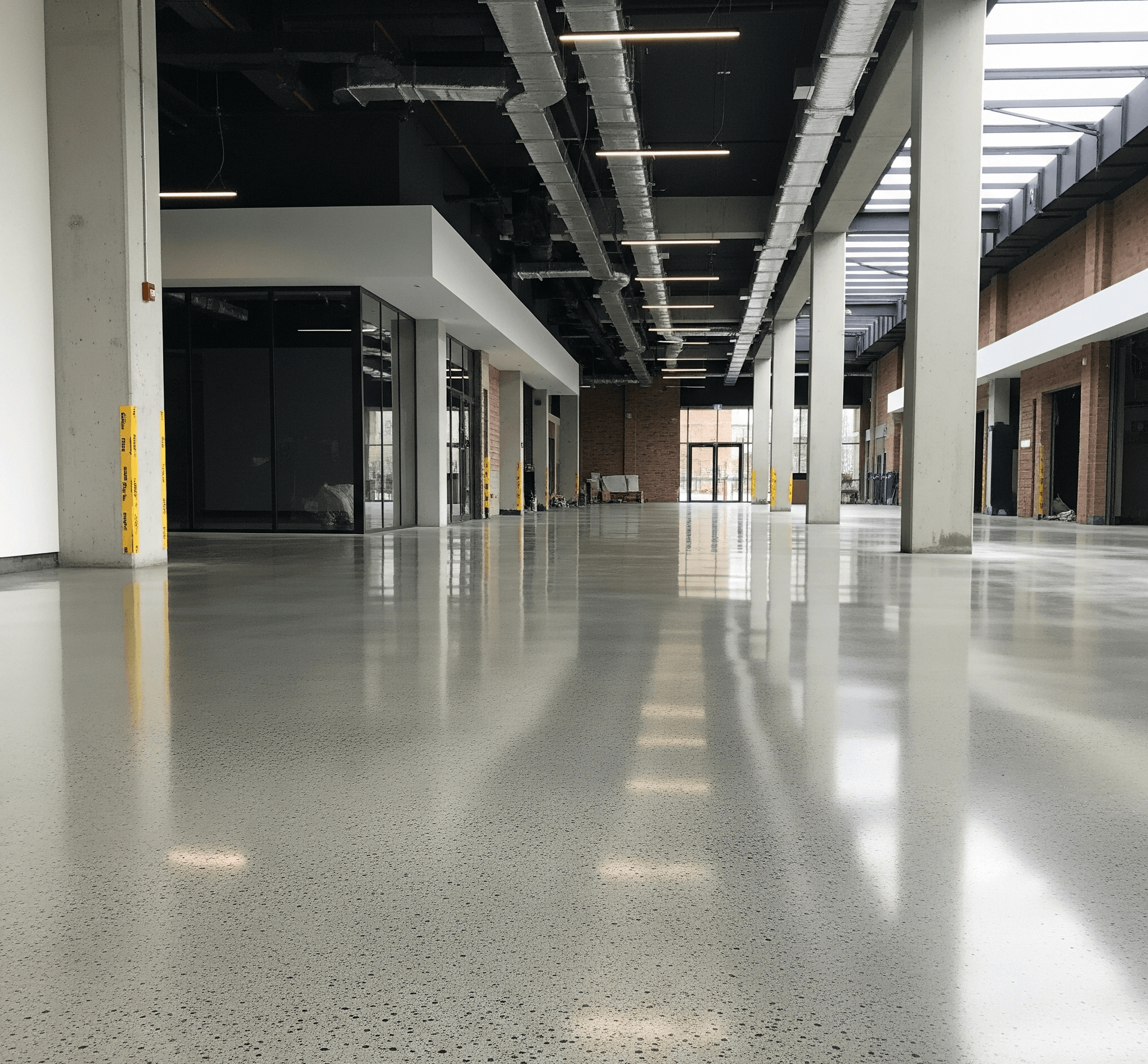
Concrete Polishing: Sleek, Sustainable Flooring That Performs
Concrete Polishing: Sleek, Sustainable Flooring That Performs
Polished concrete has become the go-to solution for commercial, industrial, and even residential spaces seeking durability, design flexibility, and long-term value. Concrete polishing enhances your existing concrete slab, turning it into a smooth, reflective, and low-maintenance surface without additional materials or coatings.
At Los Angeles Epoxy, we specialize in concrete floor polishing that’s as functional as it is visually appealing. Whether you need polished floors for a warehouse, showroom, office, or garage, our team delivers professional results with minimal downtime.
What Is Concrete Polishing and How Does It Work?
Concrete polishing is the mechanical process of grinding, honing, and refining a concrete surface using progressively finer abrasives—typically diamond pads—combined with a densifier that hardens the surface. It’s more than just polishing concrete—it’s engineering it to last.
We use advanced concrete polishing machines to remove surface imperfections, flatten high spots, and expose aggregates when desired. The result is a dense, glossy, and resilient surface that resists abrasion, dusting, and staining.
Polishing can be customized to different gloss levels, ranging from a soft matte to a striking mirror-like shine. This flexibility makes it suitable for both functional and decorative settings. The process also improves light reflectivity, contributing to energy efficiency in commercial environments.
Benefits of Polishing Concrete Floors
Durability: Resistant to foot traffic, forklifts, and heavy machinery.
Low Maintenance: No waxing, stripping, or coatings required.
Eco-Friendly: Utilizes existing concrete; no hazardous materials added.
Light Reflectivity: Increases brightness and reduces lighting costs.
Custom Finishes: From satin to high-gloss and exposed aggregate looks.
Polished concrete also helps eliminate allergens and dust mites, contributing to cleaner indoor air quality. With no adhesives or coatings that can emit volatile organic compounds (VOCs), it is a healthier option for enclosed environments.
Why Choose Concrete Polishing Over Other Finishes?
When comparing flooring systems, it’s easy to focus on appearance or upfront cost—but longevity, maintenance needs, and functionality play just as important a role. Polishing concrete floors offers a balanced solution that outperforms many traditional alternatives. It transforms a standard slab into a resilient surface that holds up under heavy use while delivering a clean, modern aesthetic.
Feature | Polished Concrete | Epoxy Coating | Vinyl Tile |
Lifespan | 10–20+ years | 5–10 years | 3–7 years |
Maintenance | Very Low | Moderate | High |
Chemical Resistance | Moderate | High | Low |
Slip Resistance (Treated) | Good | Excellent | Moderate |
Application Time | 2–4 days | 2–3 days | 2–5 days |
Concrete polishing balances performance, price, and aesthetics like few other surfaces can.
Who Needs Concrete Polishing Services?
If you manage any of the following, concrete polishing services are worth considering:
- Warehouses & Distribution Centers
- Retail Stores & Showrooms
- Offices & Lobbies
- Restaurants & Breweries
- Educational Institutions
- Healthcare Facilities
Polished concrete floors offer a clean, modern appearance that elevates a brand while cutting down on maintenance costs. These spaces often experience heavy foot traffic, chemical spills, or equipment wear, all of which polished concrete can withstand without sacrificing visual appeal.
How Much Does Concrete Polishing Cost?
Concrete polishing cost typically ranges from $3 to $8 per square foot, depending on:
- Floor condition
- Gloss level (matte, semi-gloss, high-gloss)
- Surface prep and repair requirements
- Square footage
- Desired decorative finishes (dyes, stenciling, exposed aggregate)
We offer free site inspections and transparent pricing so you can plan your project with confidence. Custom quotes help you weigh long-term savings against your initial investment.
Tips for Maintaining Polished Concrete Floors
Once your floor is polished, maintaining its sleek look is simple but essential. Regular dry dust mopping will help eliminate fine particles that can wear down the surface. For deeper cleaning, use a pH-neutral cleaner with water and a microfiber mop or auto-scrubber. Avoid acidic or ammonia-based cleaners as they can dull the shine. For commercial settings, periodic burnishing can restore gloss and remove scuff marks.
Common Mistakes to Avoid When Polishing Concrete
Polishing concrete is a technical process that requires experience and the right equipment. One common mistake is skipping proper surface preparation—failing to remove old coatings or address cracks can lead to uneven finishes. Another error is rushing the grinding process. Each stage should be completed with the right grit level to ensure a smooth and durable result. Finally, many DIY attempts overlook densifier application or use low-quality sealants, reducing the floor’s performance and lifespan.
FAQs: Polishing Concrete Floors Explained
Q1: How long does polished concrete last?
With proper maintenance, polished concrete can last over 20 years without needing resurfacing. It’s one of the longest-lasting flooring options available. It resists heavy traffic, is less prone to cracks compared to untreated slabs, and retains its gloss for years. Periodic burnishing and spot treatment can help maintain the finish in high-use areas.
Q2: Can you polish old concrete?
Yes, as long as the slab is structurally sound. Cracks can be filled and surfaces leveled as part of the polishing process. Old concrete often requires more prep work, including grinding to remove surface blemishes or prior coatings. After polishing, the surface becomes denser and more resistant to water, stains, and daily wear.
Q3: Is polished concrete slippery?
Despite its shine, polished concrete meets industry slip resistance standards, especially when treated with anti-slip additives. The texture can be further customized depending on the environment—glossy for showrooms or more textured for industrial use. In wet areas, we recommend adding fine grit to improve traction and reduce the risk of slips.
Q4: Can you add color to polished concrete?
Absolutely. We offer dyeing services that penetrate the surface and provide vibrant, long-lasting hues. A wide variety of colors can be used, from subtle earth tones to bold modern shades. Color can be applied uniformly or in patterns for a decorative touch, and it won’t peel or fade like surface paints.
Q5: Does polished concrete require sealing?
No sealers are required, but optional penetrating protectants can be applied for additional stain resistance. These protectants are especially beneficial in high-traffic areas or where food and beverages are common. They enhance the floor’s longevity while preserving its natural appearance and breathability.
Final Thoughts: A Smart Investment for Long-Term Flooring
Concrete polishing turns basic slabs into long-lasting, attractive, and cost-efficient surfaces. Whether you’re designing a high-traffic showroom or upgrading a commercial floor, polished concrete delivers exceptional value without sacrificing style.
It’s not just about looks—polished concrete is a strategic upgrade. It reduces the need for ongoing repairs, eliminates wax or coating costs, and offers a finish that withstands the test of time. As sustainability becomes more important in design, polished concrete also stands out for its low environmental impact and LEED-friendly benefits.
From retail to industrial to residential applications, concrete polishing enhances property appeal, safety, and functionality. If you’re looking for a low-maintenance, high-performance flooring solution that supports your long-term goals, polished concrete is the clear choice.
Seal, Protect, and Enhance – Book Your Epoxy Installation Today!
Ready to upgrade your floor? Contact Los Angeles Epoxy today for a free estimate and transform your concrete into something spectacular.