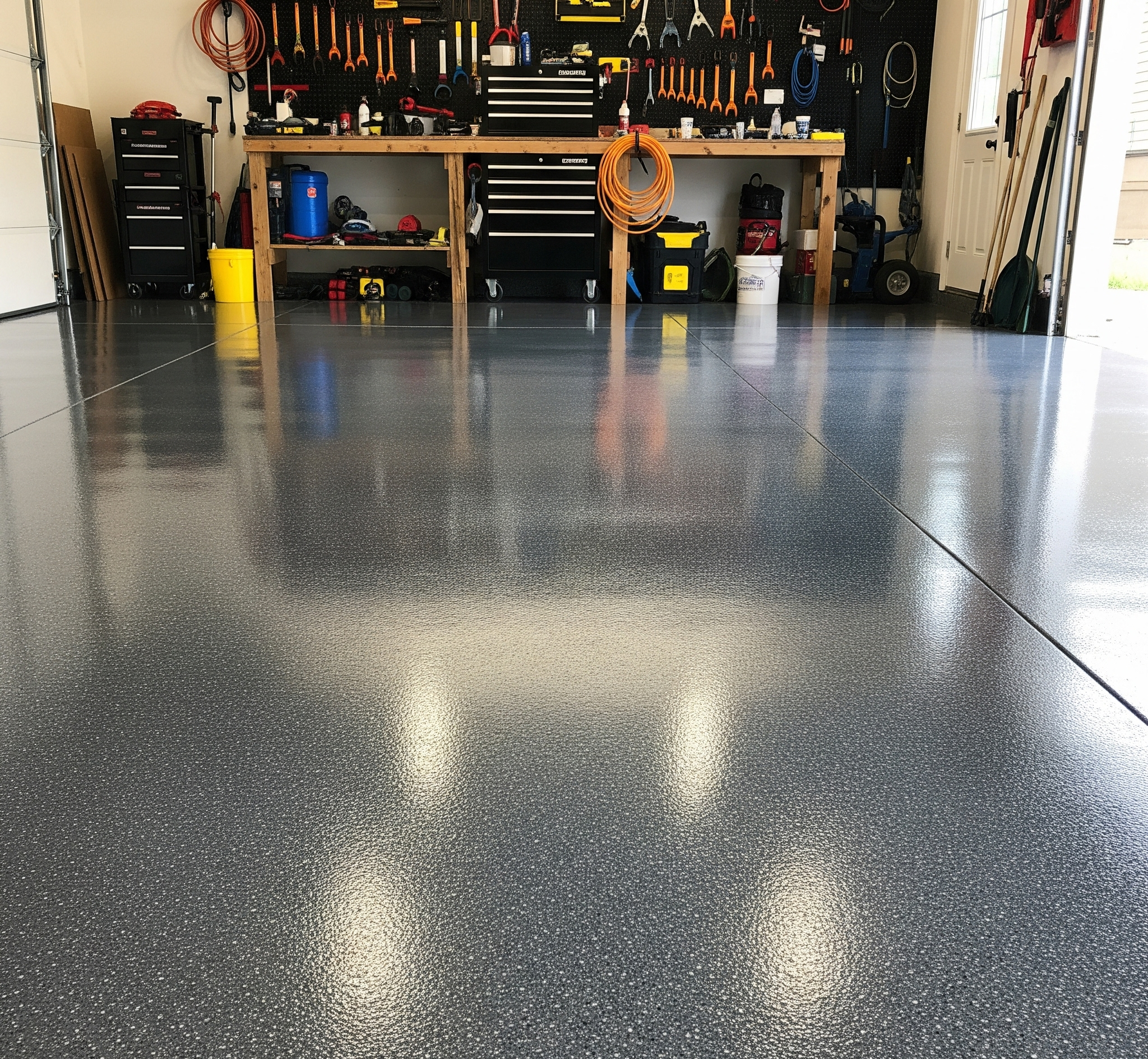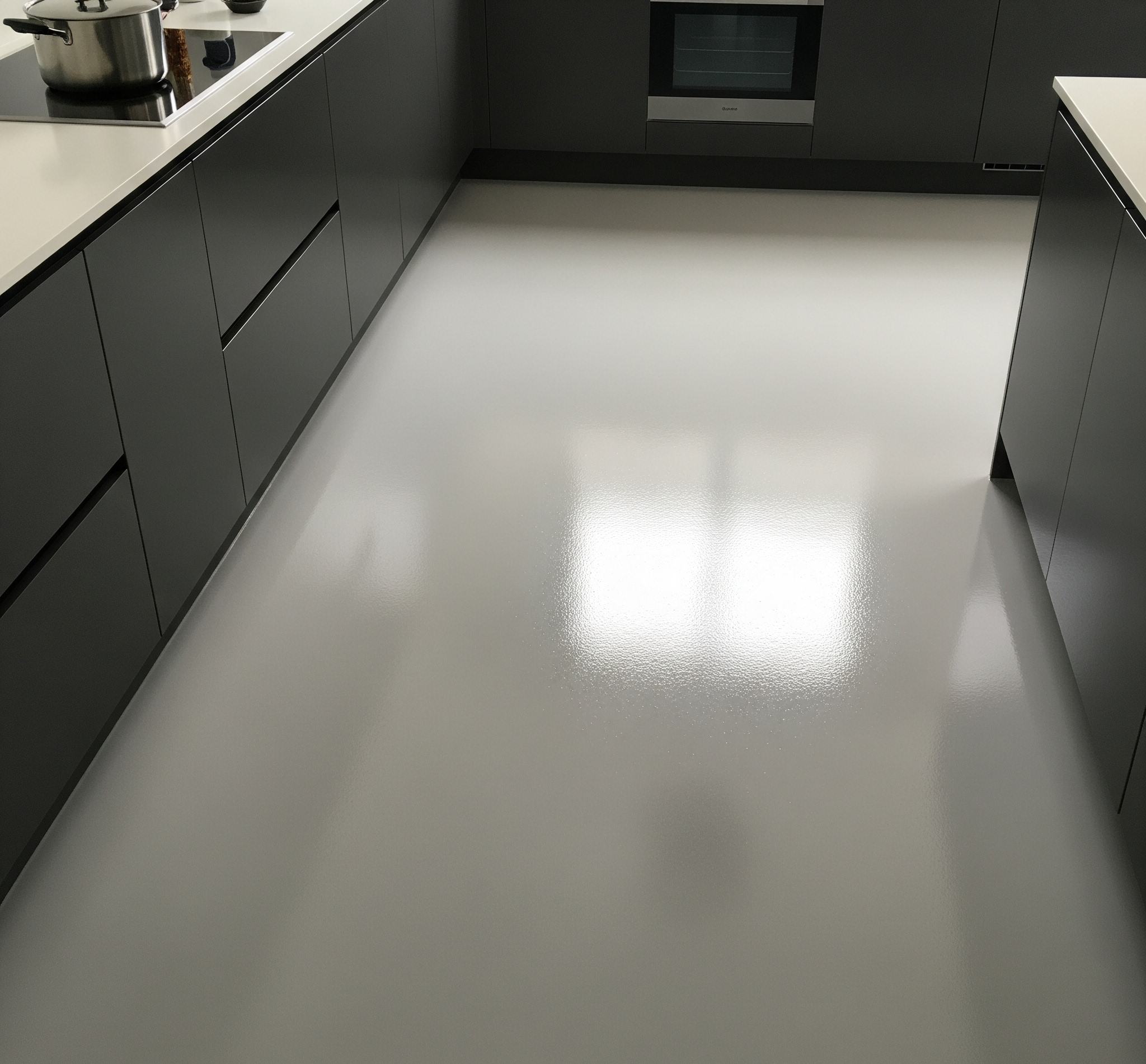
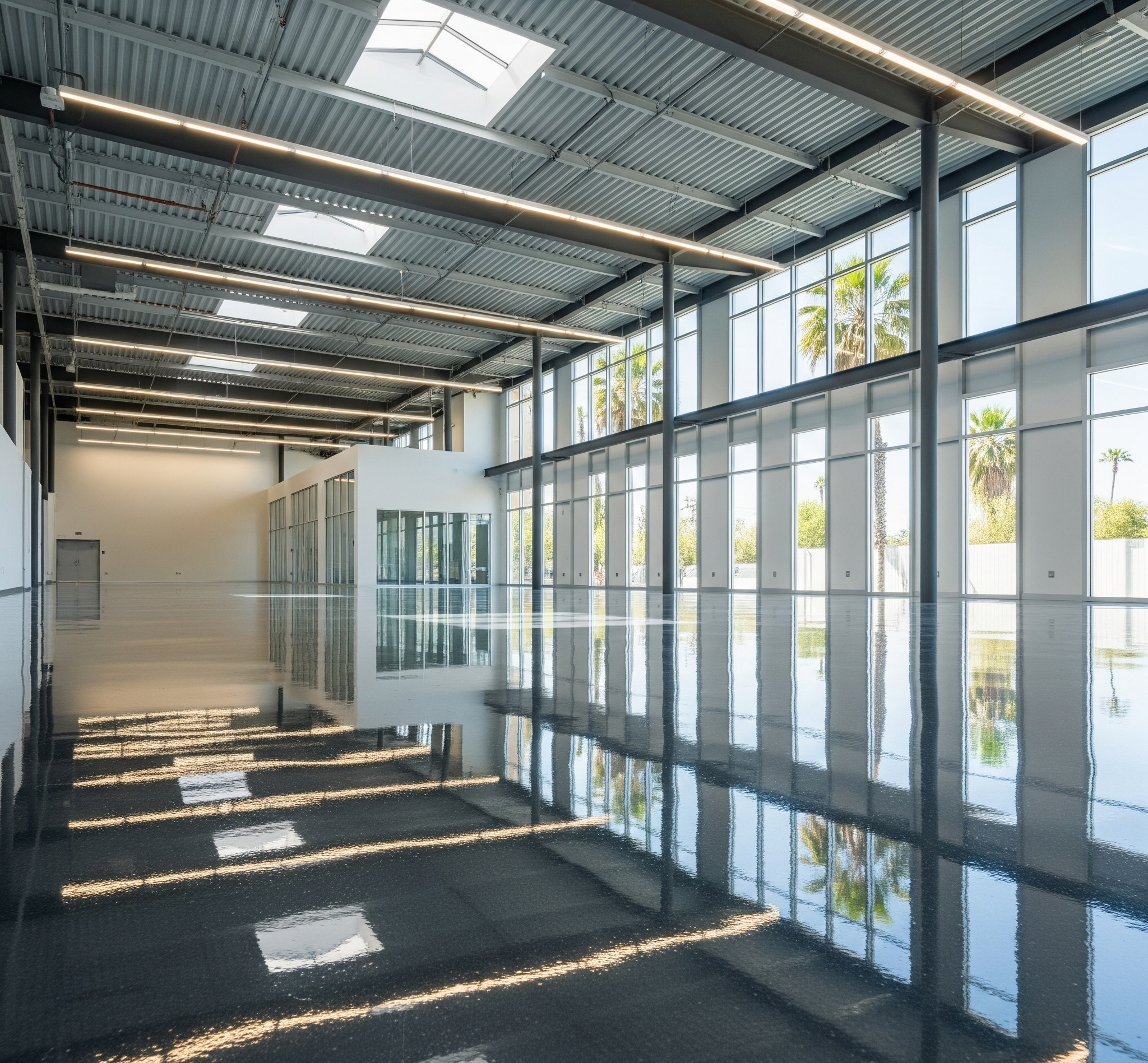
Top Commercial Epoxy Flooring Contractors in El Monte & Laguna Niguel

Top Commercial Epoxy Flooring Contractors in El Monte & Laguna Niguel

Top Commercial Epoxy Flooring Contractors in El Monte & Laguna Niguel

Introduction: Why Contractors Matter in Epoxy Flooring Projects

Choosing the right commercial epoxy flooring contractors can make or break your flooring investment. The quality of your installation affects not only durability but also safety, hygiene, and compliance with local health codes. In bustling business hubs like El Monte and Laguna Niguel, commercial spaces need epoxy floors that withstand heavy machinery, chemical spills, and constant foot traffic.

Whether you’re outfitting a warehouse, restaurant, or medical facility, proper commercial epoxy flooring installation ensures longevity, efficiency, and return on investment. This blog will walk you through why contractor experience is essential, what to look for in a qualified installer, and how to choose the best commercial epoxy flooring company for your needs.

With epoxy systems offering slip resistance, impact protection, and seamless surfaces, selecting the right contractor is as crucial as the product itself. Let’s explore what sets reputable commercial epoxy flooring installers apart and how to ensure you’re getting high-value service.

What Do Commercial Epoxy Flooring Contractors Do?

Commercial epoxy flooring contractors specialize in the preparation, application, and finishing of epoxy floor systems in commercial and industrial environments. Unlike residential projects, these installations must meet higher performance standards, regulatory codes, and withstand greater abuse.

Here’s what their work typically involves:

  • Surface prep: Grinding, cleaning, or shot blasting concrete to ensure proper adhesion.

  • Crack repair and leveling: Ensuring a uniform and defect-free substrate.

  • Multiple epoxy layers: Installing base coats, color coats, and topcoats with precise curing times.

  • Custom finishes: Adding textures, anti-slip granules, or decorative flakes based on the client’s needs.

Experienced commercial epoxy flooring installers know how to work around HVAC systems, drains, and machinery without compromising results. They can also advise on the best epoxy formulation—be it 100% solids, water-based, or solvent-based—based on your facility’s conditions.

Key Traits of a Reputable Epoxy Flooring Company

When selecting a commercial epoxy flooring company, credentials and reliability are essential. Here are the core qualities that distinguish top-rated contractors:

  • Experience: Look for companies with 5+ years in large-scale commercial projects.

  • Certifications: Installers trained in OSHA safety, resin chemistry, and substrate repair.

  • Portfolio: Proven track record across industries—retail, food, healthcare, and manufacturing.

  • Local knowledge: Understanding climate, humidity, and local code requirements in El Monte and Laguna Niguel.

  • Insurance and Warranties: Coverage for liability and workmanship.

Good contractors also guide clients through material selection, usage expectations, and timeline transparency. They manage logistics with minimal disruption to your operations, offering aftercare plans for maintenance.

Comparing Top Epoxy Flooring Contractor Services

Not all contractors are created equal. The chart below outlines differences in services, pricing, and key benefits offered by various commercial epoxy flooring contractors:

Contractor Type

Price Range (per sq. ft.)

Strengths

Ideal For

Local Independent Installers

$3.50 – $6.00

Personalized service, competitive pricing

Small to mid-size businesses

National Epoxy Flooring Chains

$5.50 – $9.00

Standardized systems, faster turnaround

Large retail or franchise chains

Specialty Industrial Contractors

$6.00 – $12.00

High-end solutions, regulatory compliance

Healthcare, food processing

Green/Eco Flooring Specialists

$4.50 – $8.00

Low-VOC, sustainable options

Eco-conscious commercial spaces

Whether your project involves safety zones, equipment-heavy layouts, or chemical exposure, choosing the right contractor ensures that you’re not just installing a floor—you’re securing performance and protection.

Local Insights: Contractors in El Monte & Laguna Niguel

In El Monte, contractors often deal with industrial warehouses, busy automotive garages, and distribution centers. These environments demand commercial epoxy flooring installation that resists oil, forklifts, and temperature swings. Trusted installers here typically offer urethane topcoats or moisture vapor barriers as part of their packages.

In Laguna Niguel, aesthetics are just as important as functionality. Many businesses—spas, restaurants, luxury retail—opt for decorative epoxy finishes that blend elegance with slip resistance. Contractors in the area are familiar with ADA requirements, making them ideal partners for renovations or new builds in hospitality.

Across both cities, epoxy floor specialists understand the local permitting process and work closely with general contractors to meet tight timelines. They’re also aware of coastal moisture challenges and know how to prevent delamination or blistering in high-humidity zones.

FAQ: Commercial Epoxy Flooring Contractors

Q1: How long does commercial epoxy flooring installation take?
Most projects take 2–5 days, depending on square footage, number of coats, and curing times. Planning with your commercial epoxy flooring installers helps avoid delays. Additional time may be needed for complex layouts or specialty coatings. Contractors often plan work around your schedule to minimize disruption.

Q2: Are epoxy floors safe for food and medical facilities?
Yes, when installed by a certified commercial epoxy flooring company. Antimicrobial additives and seamless finishes ensure compliance with USDA, FDA, and OSHA standards. These floors also resist chemical spills and heavy traffic, making them ideal for regulated environments.

Q3: How much does epoxy flooring cost for commercial spaces?
Prices range from $3 to $12 per sq. ft., depending on material, complexity, and finish. Consult your contractor for accurate pricing. The quote typically includes surface prep, installation labor, and finishing. Warranty options may affect pricing, too.

Q4: Can epoxy be applied over old concrete or tile?
Yes, but surface prep is crucial. Skilled commercial epoxy flooring contractors will assess the substrate and recommend either overlays or complete removal. Failure to properly prepare surfaces can lead to peeling or cracking.

Q5: Do contractors offer warranties?
Reputable companies do. Coverage can span from 1 to 10 years, depending on materials and installation conditions. Be sure to review warranty terms, including maintenance requirements and coverage limits.

Final Thoughts: Trust the Experts for Commercial Epoxy Floors

Investing in epoxy flooring is a strategic decision for any commercial property. But the material alone won’t guarantee success—it’s the expertise of commercial epoxy flooring contractors that brings long-term value. From preparation to finishing touches, they ensure each layer of epoxy is applied correctly, cured properly, and meets performance expectations.

Whether you’re in a high-traffic warehouse in El Monte or managing a luxury space in Laguna Niguel, professional installation reduces downtime, eliminates costly errors, and maximizes return on investment. With trained crews using industrial-grade tools and knowledge of local building codes, your flooring upgrade can proceed smoothly and on time.

A licensed commercial epoxy flooring company not only provides superior results but also peace of mind. They offer warranties, clear estimates, safety compliance, and maintenance guidance—all essential for long-term performance.

From antimicrobial needs in kitchens to slip resistance in showrooms, expert contractors tailor solutions to each use case. Their advice during product selection and layout planning can make a huge difference in operational efficiency and aesthetics.

Ready for a Seamless Floor? Contact Los Angeles Epoxy Today!
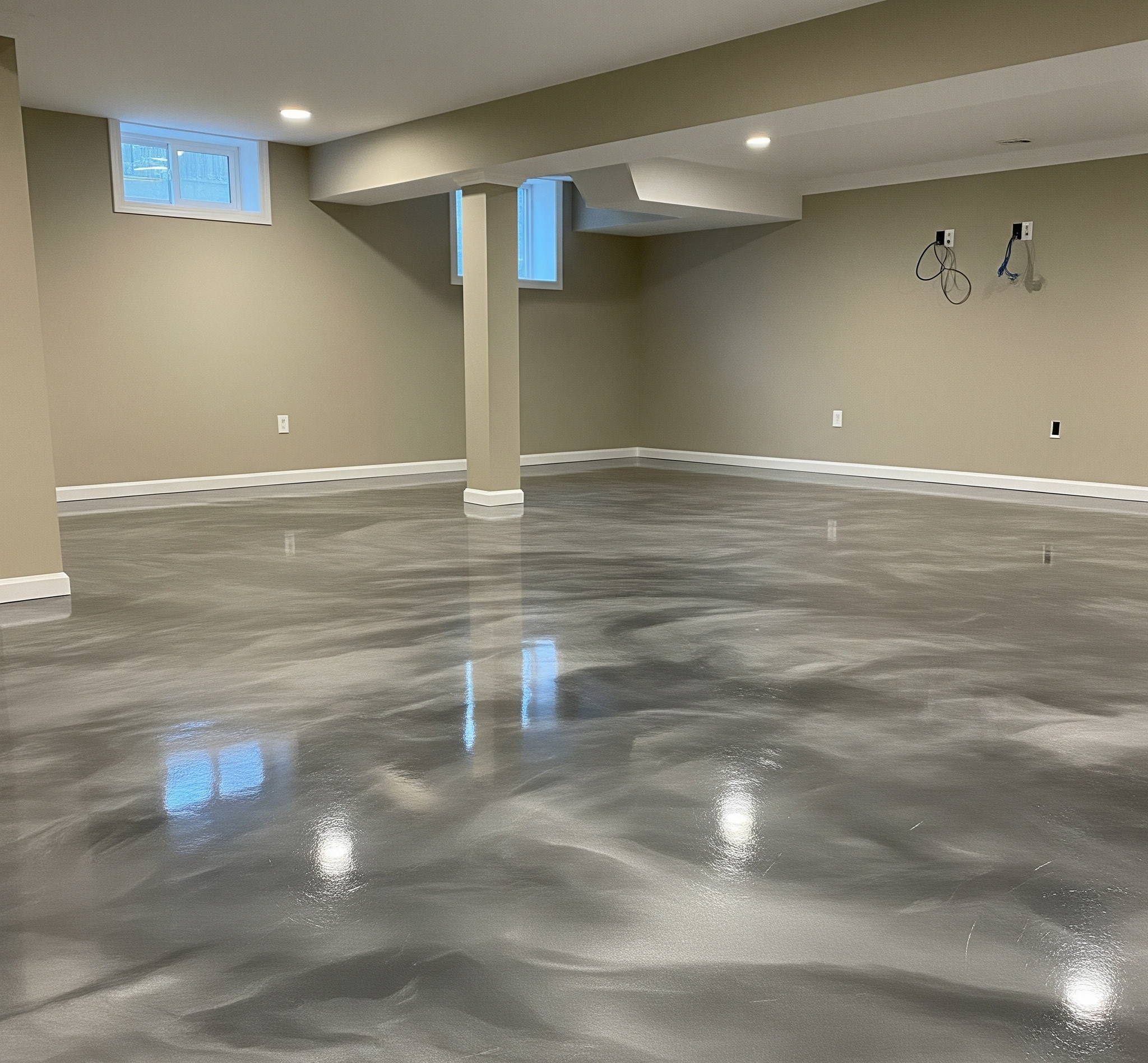
Recent Posts

Metallic Epoxy for Specific Areas: Elevating Garages & Basements with Style

Metallic Epoxy for Specific Areas: Elevating Garages & Basements with Style

Metallic Epoxy for Specific Areas: Elevating Garages & Basements with Style

Metallic Epoxy Garage Floor: Performance Meets Beauty

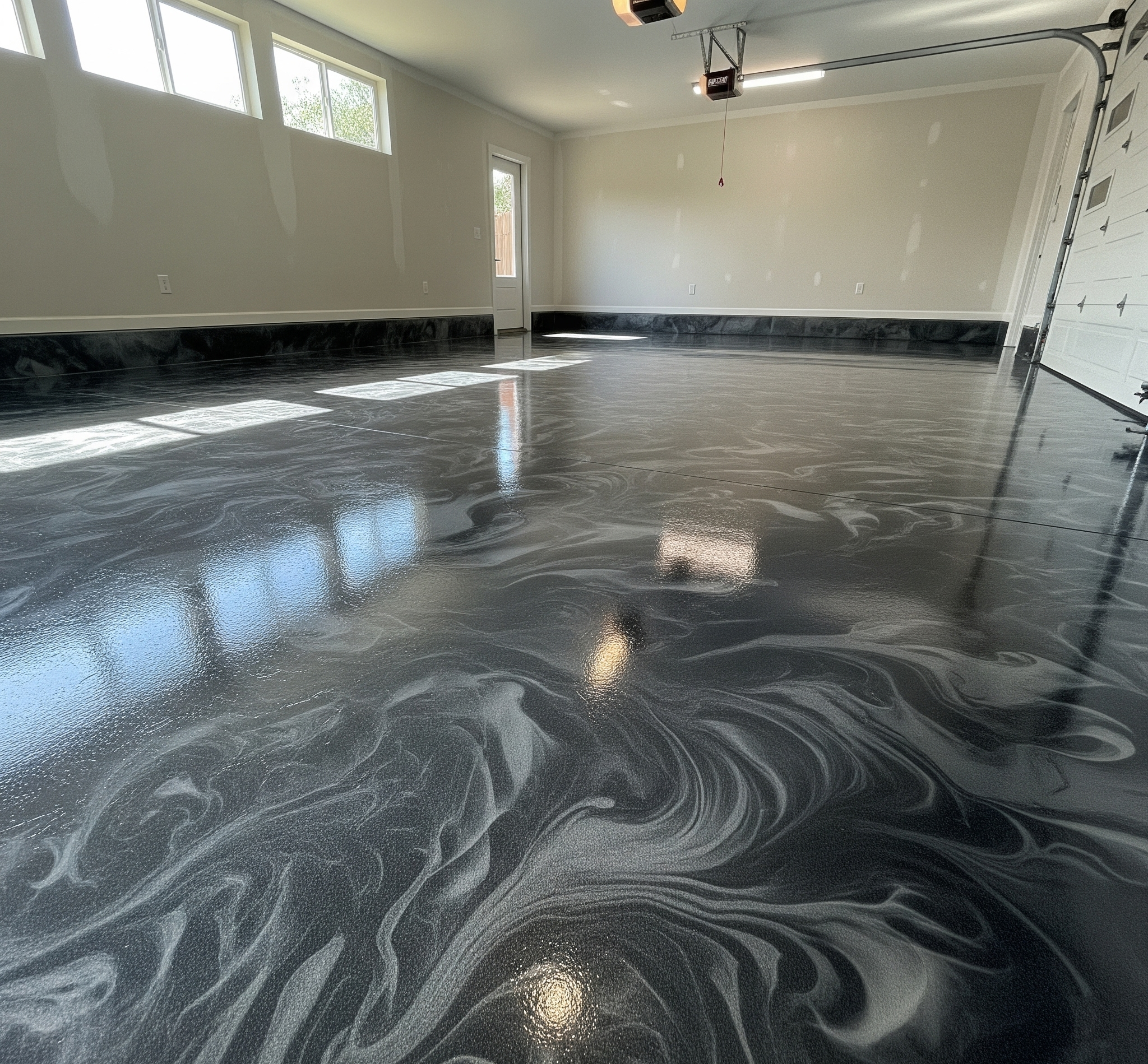
A metallic epoxy garage floor is not just a surface—it’s a statement. Designed to withstand the daily demands of hot tires, tool drops, and fluid spills, this high-gloss flooring system transforms a utilitarian garage into a refined, design-forward space.

Metallic epoxy infuses shimmering pigments into a durable epoxy base, creating depth and movement reminiscent of flowing lava, polished stone, or cloud-like patterns. It’s perfect for those who want to marry toughness with artistry. Beyond its beauty, it provides exceptional resistance to stains, chemicals, and abrasions—making it both stylish and smart.

Whether used in residential garages or performance showrooms, metallic epoxy floors deliver a clean, modern look that elevates more than just the vehicle parked on top.

Metallic Garage Floor Epoxy: Customization Without Compromise

Choosing metallic garage floor epoxy means choosing personalization. With an almost endless palette of colors and application techniques, each floor becomes a one-of-a-kind creation. Think midnight black with silver veins, burnt copper with golden undertones, or oceanic blues that ripple with light.

What sets metallic epoxy apart is its ability to reflect personality. Some prefer soft, pearlescent swirls. Others lean into bold, dramatic contrasts. Either way, the finish is seamless, non-porous, and easy to maintain—requiring only a mop and mild detergent to keep it gleaming.

For homeowners seeking a garage that functions like a workspace but feels like a gallery, this is the answer. It’s customization without compromise.

Metallic Epoxy Basement Floor: Warmth, Light, and Durability

Basements often suffer from a reputation of being cold, dark, and unfinished. But a metallic epoxy basement floor flips that narrative. With its radiant sheen and swirling patterns, it reflects light beautifully—helping to brighten spaces that typically lack windows or natural sunlight.

But it’s not just about looks. Metallic epoxy is moisture-resistant, making it a smart solution for basements prone to dampness. It resists mold growth, prevents dust buildup, and won’t warp or crack under pressure. Whether it’s a home gym, theater, office, or guest suite, this flooring adds instant elegance and functionality.

Plus, it’s hypoallergenic, making it ideal for families seeking a clean, low-maintenance flooring option that doesn’t trap allergens.

Metallic Epoxy Floor Garage Systems: Installation and Longevity

Installing a metallic epoxy floor garage system is an art and a science. It begins with precise surface preparation—grinding or shot-blasting the concrete to ensure maximum adhesion. Next comes the primer, followed by the tinted basecoat and the metallic layer. Finally, a clear topcoat seals everything in, locking in shine and protecting against damage.

Depending on the system and environment, cure times vary, but the outcome is consistently impressive. A properly installed metallic epoxy floor can last 10–20 years or more, even under heavy daily use.

These systems are engineered not just to look stunning on day one, but to maintain their beauty and resilience over the long haul. No peeling. No bubbling. No flaking. Just enduring excellence.

Metallic Epoxy Garage Floors: Where Function Becomes Focal Point

Metallic epoxy garage floors are for those who believe that even the most practical spaces deserve polish. Gone are the days when garages were left to dust, oil stains, and cracked concrete. Today’s garages are extensions of the home—used for hobbies, workouts, detailing, or entertaining.

Metallic epoxy bridges the gap between form and function. It’s tough enough to handle torque wrenches and jacks, yet beautiful enough to showcase collectibles or create envy-worthy Instagram backdrops.

Its reflective nature also enhances lighting, reducing shadows and brightening the space. For garages used after dark—or with minimal windows—this is a surprisingly beneficial bonus.

Metallic Epoxy Garage Floor Cost: Investment in Aesthetic Longevity

When it comes to upgrading a garage or basement, people often ask: what’s the metallic epoxy garage floor cost?

While prices vary by region, size, and complexity, the average range for a professional metallic epoxy installation falls between $7 and $15 per square foot. For a standard two-car garage, that translates to roughly $2,000 to $5,000.

The cost includes surface prep, materials, labor, and sealing. Premium pigments or intricate designs may push the price higher—but the value is clear. This isn’t just a coating; it’s a long-term investment in beauty, durability, and resale appeal.

Compared to tile, vinyl, or stained concrete, metallic epoxy offers superior longevity, minimal maintenance, and a higher-end aesthetic at a competitive price.

Why This Article Matters: Importance of the Article

Garages and basements often go overlooked. They become catch-all zones or storage afterthoughts, rarely matching the care and design of the rest of the home. This article exists to change that mindset.

By showcasing the versatility, beauty, and practicality of metallic epoxy floors, it helps homeowners reimagine these forgotten spaces. Whether for comfort, pride, resale value, or sheer joy, upgrading your floor isn’t a luxury—it’s a powerful enhancement.

Understanding the specific benefits of metallic epoxy by area ensures more informed, inspired decisions when planning a renovation or new build.

Conclusion: The Floor that Changes Everything

A metallic epoxy floor does more than protect concrete—it transforms it. With light-reflecting pigments, seamless finishes, and customized color blends, it elevates any garage or basement from ordinary to extraordinary.

It’s the kind of upgrade that not only looks amazing but lasts for decades. The kind that requires little maintenance but offers big rewards. And the kind of surface you can be proud to stand on, work over, or show off to guests.

From function to focal point—metallic epoxy is the floor that changes everything.

Bring Your Vision to Life with Metallic Epoxy (CTA)

Ready to transform your garage or basement into a space that inspires? At Los Angeles Epoxy, we specialize in custom metallic epoxy solutions that combine strength, beauty, and precision.

Visit losangelesepoxy.com to explore finishes, view completed projects, and request a free, no-pressure estimate. Let your floor reflect your style—bold, bright, and built to last.

Recent Posts

Metallic Epoxy Flooring by Color: A Bold Evolution of Style and Surface

Metallic Epoxy Flooring by Color: A Bold Evolution of Style and Surface

Metallic Epoxy Flooring by Color: A Bold Evolution of Style and Surface

Black Metallic Epoxy Floor: Bold Elegance with Attitude

There’s something magnetic about a black metallic epoxy floor. It radiates confidence, precision, and refined taste. Dark and dramatic, it brings depth and dimension to any garage or workspace, creating an almost cinematic atmosphere. The rich, obsidian base flows with ribbons of silver, charcoal, or even subtle bronze, forming a look that is both powerful and hypnotic.

This floor makes a strong architectural statement. It works beautifully in minimalist, industrial, and luxury spaces alike. Black metallic epoxy is also highly practical—it conceals dust, tire scuffs, and oil stains, maintaining its clean, polished look with minimal upkeep.

For those seeking a floor that exudes sophistication and strength in equal measure, black is the definitive choice.

White Metallic Epoxy Floor: A Bright Canvas of Modern Design

A white metallic epoxy floor introduces clarity, openness, and quiet luxury into a space. Unlike flat, clinical whites, this finish shimmers with complexity—featuring pearlized swirls, soft silver undertones, and reflective light play that shifts throughout the day.

This type of floor works especially well in modern garages, art studios, salons, and home gyms. It reflects ambient and artificial light, helping smaller spaces feel larger and more expansive. White epoxy also serves as a pristine canvas for bold color accents, modern decor, or custom vehicle displays.

The result? A floor that’s light, fresh, and effortlessly contemporary—without sacrificing performance or durability.

Blue Metallic Epoxy Floor: Oceanic Depth and Serenity

A blue metallic epoxy floor delivers a calm, cool ambiance—balanced by a bold undercurrent of personality. The color’s fluidity evokes imagery of deep oceans, icy glaciers, or even stormy skies, depending on the shade and lighting.

Swirls of metallic silver or slate gray bring the floor to life with an almost three-dimensional effect. Whether you opt for a deep navy or a brighter sapphire, blue epoxy offers a modern, energetic twist on traditional concrete coatings.

This floor suits luxury garages, modern homes, tech-forward offices, or entertainment spaces where cool tones meet warm lighting. It’s both relaxing and invigorating—perfect for those who appreciate balance in their surroundings.

Pearl White Metallic Epoxy Floor: Understated Glamour

A pearl white metallic epoxy floor brings an ethereal quality to interior floors. It’s elegant without being ostentatious, offering a gentle sheen and graceful color movement. Subtle accents of champagne, dove grey, or soft gold add richness and complexity beneath the polished finish.

Pearl white floors are often found in luxury homes, boutique retail spaces, and modern design studios. Their refined appearance complements a range of aesthetics—from coastal minimalism to upscale industrial.

Beyond beauty, this floor is tough beneath its soft exterior. It withstands heavy traffic, resists staining, and maintains its pristine appearance with very little effort.

Gray Metallic Epoxy Floor: Neutral Sophistication, Elevated

A gray metallic epoxy floor is a designer’s dream—calm, adaptable, and quietly luxurious. It serves as a stunning neutral base while offering all the texture and depth of a metallic finish.

From cool silver-grays to warmer slate tones, gray epoxy harmonizes with virtually every interior style. The flowing metallic patterns resemble polished concrete or natural stone, giving the floor an architectural edge without looking harsh or unfinished.

Gray epoxy works well in multi-functional spaces: modern garages, converted studios, office spaces, and beyond. It’s timeless yet trend-forward, offering sophistication that doesn’t demand attention, but always earns it.

Brown Metallic Epoxy Floor: Earthy Warmth Meets Modern Resilience

For those who prefer warmth underfoot, the brown metallic epoxy floor provides a grounded, luxurious feel. Its hues range from deep espresso to rich walnut, accented by copper or bronze metallics that shift with the light.

The visual effect can mimic wood grain, polished leather, or antique stone—adding both elegance and natural character. This makes brown epoxy ideal for rustic-industrial spaces, masculine home gyms, upscale garages, or cozy creative studios.

It’s earthy, organic, and welcoming, yet still incredibly durable and low-maintenance.

Metallic Blue Epoxy Floor: Vibrancy with an Edge

A metallic blue epoxy floor takes the allure of blue one step further—with added intensity, sheen, and motion. The metallic elements give the color a futuristic, almost electric quality that dances across the floor under any lighting.

This finish works beautifully in high-energy spaces like car showrooms, modern gyms, tech startup offices, or garages designed for display and entertainment. Bold silver veining or black accents can be added for contrast and drama.

More than a color, metallic blue is a statement—a way to express style with clarity and purpose.

Why This Article Matters: Understanding Color’s Impact

Color is not just decoration—it’s emotion. It influences how we feel in a space and how we interact with it. In a garage, showroom, or living space, flooring is foundational. It sets the tone. Choosing the right metallic epoxy floor color is as much about personality and purpose as it is about aesthetic.

This article exists to help homeowners, designers, and business owners see the full potential of metallic epoxy—beyond gray concrete or utilitarian function. It’s about choosing a floor that speaks for you, endures with you, and evolves with your space.

When chosen thoughtfully, a metallic epoxy floor becomes more than just something you walk on—it becomes part of your story.

Conclusion: Style that Stands the Test of Time

Metallic epoxy flooring offers an exceptional blend of art and architecture. Each color—whether bold, subtle, warm, or cool—offers a different experience underfoot. And because epoxy is engineered to endure, the beauty you choose today is the strength you’ll rely on for years.

Whether you’re seeking the cool serenity of blue, the confident richness of black, or the glowing refinement of pearl white, there’s a metallic epoxy option to fit your style, function, and vision.

These aren’t just floors. They’re foundations of lifestyle.

Take the Next Step Toward a Signature Space (CTA)

Ready to reimagine your garage, studio, or commercial space with a customized metallic epoxy finish? At Los Angeles Epoxy, our specialists help you turn color into craftsmanship—ensuring every swirl, every shade, and every finish reflects your vision.

Visit losangelesepoxy.com to explore our color galleries, book a design consultation, and receive a personalized quote. Your space deserves a floor that’s as bold, refined, or creative as you are. Let’s bring that to life—beautifully, and built to last.

Recent Posts

Types of Epoxy Garage Floors: Transforming Concrete with Style and Strength

Types of Epoxy Garage Floors: Transforming Concrete with Style and Strength

Types of Epoxy Garage Floors: Transforming Concrete with Style and Strength

Metallic Epoxy Garage Floor: A Swirl of Luxury and Strength

A metallic epoxy garage floor isn’t just flooring—it’s visual alchemy. Imagine stepping into your garage and being greeted by a floor that gleams like liquid metal or the surface of a distant galaxy. These floors are made by infusing epoxy resin with reflective metallic pigments, which swirl and settle into complex, fluid patterns during application. No two floors are ever the same.

Beyond their cinematic beauty, metallic epoxy floors are high-performance. They resist chemicals, abrasions, tire marks, and even moisture. This makes them ideal for car collectors, hobbyists, and anyone who wants their garage to feel like an extension of a luxury showroom. Whether in gunmetal silver, molten bronze, or midnight pearl, this type of epoxy delivers artistic depth with industrial resilience.

Black Epoxy Garage Floor: A Statement in Minimalism

Bold. Sophisticated. Timeless. A black epoxy garage floor turns a basic concrete slab into a sleek stage for your lifestyle. It’s the perfect backdrop for everything—from luxury vehicles to power tools.

Black epoxy hides stains well and enhances lighting by creating contrast. Available in both gloss and matte finishes, it complements modern, minimalist, and industrial interiors. Add metallic flakes or a satin topcoat for dimension and durability. When you want to make a statement without saying a word, black epoxy delivers in silence.

Red Epoxy Garage Floor: Power and Personality Beneath Your Wheels

Fiery, confident, and full of character—a red epoxy garage floor radiates energy. Whether you’re a motorsport enthusiast, an automotive restorer, or simply want a garage that feels alive, red epoxy is your go-to.

It’s a favorite among car lovers and race-inspired spaces. Deep crimson hues add drama, while brighter cherry tones reflect boldness. For balance, many pair red with black cabinetry, stainless fixtures, or checkered accents. And like all epoxy coatings, red epoxy is just as practical as it is beautiful—resistant to spills, tire wear, and time.

Grey Epoxy Garage Floor: The Neutral Hero

The grey epoxy garage floor is the silent overachiever of the epoxy world. It doesn’t clamor for attention—but its reliability, adaptability, and clean aesthetic make it a favorite among homeowners and contractors alike.

Available in shades from misty ash to deep charcoal, grey works with nearly any garage style—from classic to ultra-modern. It brightens dim spaces, masks dust, and serves as the ideal base for flake systems or accent borders. Whether you’re looking for cool sophistication or utilitarian practicality, grey epoxy delivers without the flash—but with all the substance.

Epoxy Flake Garage Floor: Function and Flair in Every Flake

A epoxy flake garage floor blends durability with personality. Tiny vinyl flakes are scattered across a freshly applied epoxy layer, then sealed with a topcoat to create a textured, speckled finish.

This system isn’t just about looks—those flakes provide subtle traction that helps prevent slips, while also camouflaging imperfections, dirt, and debris. Color blends are virtually limitless: greys with blue and black accents, tan mixes for warmth, or even custom palettes to match your car or home.

Flake systems are especially popular in garages, workshops, and commercial settings where both safety and aesthetics matter.

Marble Epoxy Garage Floor: Elegance That Endures

The marble epoxy garage floor is where classic elegance meets modern performance. Through skillful layering and blending, installers create the veined, flowing patterns typically found in high-end marble tiles—without the brittleness or cost.

Unlike natural stone, marble epoxy is seamless, impact-resistant, and impervious to oil and chemical spills. Popular in both high-end residential garages and converted living spaces, marble epoxy floors bring warmth, richness, and refinement to an often-overlooked part of the home.

Choose soft whites with subtle grey veining for a spa-like feel, or bold contrasts like black and gold for high drama.

Blue Epoxy Garage Floor: Cool, Clean, and Refreshingly Modern

A blue epoxy garage floor evokes clarity and calm—a unique choice that breathes personality into concrete. From navy and cobalt to aqua and sky, blue adds unexpected charm and freshness to garage interiors.

It pairs effortlessly with light grey walls, white cabinets, or silver fixtures. Lighter shades can visually open up small spaces, while deeper tones create a rich, grounded atmosphere. Add flakes or metallic accents for more dimension, or keep it solid for a crisp, clean look.

Whether you’re going for coastal cool or deep-space drama, blue epoxy brings serenity and sophistication to any garage floor.

Why This Article Matters: Importance of the Article

Garage floors are often the forgotten frontier of home improvement—cracked, stained, and neglected. But with epoxy, that concrete canvas becomes a showcase of design, functionality, and pride.

This article exists to illuminate what’s possible. From shimmering metallic finishes to textured flake systems and bold color statements, epoxy flooring offers more than protection—it offers transformation.

Knowing the types of epoxy garage floors helps homeowners envision what fits their lifestyle. Whether you’re after subtle elegance or a floor that sparks conversation, there’s an epoxy solution to match your goals. And with each type offering long-term durability, low maintenance, and aesthetic flexibility, the choice isn’t just smart—it’s inspired.

Conclusion

Epoxy isn’t just a coating. It’s a commitment to quality, creativity, and long-term value. From the glossy drama of a metallic epoxy garage floor to the textured practicality of flakes, each style brings its own strength, personality, and charm.

No matter your taste—bold or neutral, flashy or refined—there’s an epoxy floor that fits your space. And unlike paint or tile, epoxy is built to last, resisting the spills, scratches, and stresses of everyday life.

Your garage floor deserves more than concrete. It deserves craftsmanship. It deserves personality. It deserves epoxy.

Let’s Create Your Dream Garage Floor (CTA)

When it’s time to bring your garage to life, trust the specialists at Los Angeles Epoxy to help you choose and install the perfect flooring system.

Visit losangelesepoxy.com today to explore our finishes, get expert advice, and request your free consultation. Let your floor speak volumes—start the transformation now.

Recent Posts

Epoxy Garage Floor Kits: DIY Solutions for Durable, Beautiful Floors

Epoxy Garage Floor Kits: DIY Solutions for Durable, Beautiful Floors

Epoxy Garage Floor Kits: DIY Solutions for Durable, Beautiful Floors

Epoxy Garage Floor Kit: A Game-Changer for Home Garages

A garage floor endures more than most surfaces in a home—oil stains, tire marks, moisture, and years of neglect. That’s why homeowners are turning to the epoxy garage floor kit as a transformative solution. With the right kit, even a weekend warrior can breathe new life into a dull, cracked floor and turn it into a durable, attractive surface.

An epoxy coating offers far more than just aesthetic improvement. It creates a protective layer that shields your concrete from damage, dust, and daily grime. The kits available today have come a long way. They are more comprehensive, easier to apply, and produce more professional-looking results than ever before.

Whether you’re protecting a workshop, upgrading a home gym, or simply tired of staring at those oil stains, an epoxy garage floor kit offers a high-impact upgrade that’s surprisingly affordable—and satisfying.

Garage Floor Epoxy Kit: What’s Inside?

Before diving into your project, it’s important to understand what typically comes in a garage floor epoxy kit—and what separates the good from the great.

Most kits include:

  • Part A (resin) and Part B (hardener) – These two components create the chemical bond that makes epoxy so resilient.

  • Decorative flakes – Optional but popular for adding texture and camouflaging imperfections.

  • Etching solution – Prepares the surface by opening up the concrete pores.

  • Mixing tools – Often a stirring stick or paddle for drill mixing.

  • Instruction manual – Sometimes paired with video tutorials.

  • Protective topcoat – Found in premium kits, offering UV protection and enhanced durability.

Some kits may also include non-slip additives, gloves, and rollers, while others assume you’ll provide your own tools. Before purchasing, check the coverage rate. A single epoxy kit for garage floor use might promise 200 square feet, but that number drops significantly if your surface is highly porous or textured.

Epoxy Garage Floor Kits vs. Professional Installation

When it comes to floor coatings, there’s always a crossroads: do-it-yourself or hire a pro? For many, epoxy garage floor kits provide an appealing middle ground between cost savings and visual impact.

Pros of using a kit:

  • Affordability – Kits range from $100 to $400, making them far more budget-friendly than professional jobs.

  • Convenience – Everything arrives in one box. No need to source individual components.

  • Satisfaction – Completing the project yourself offers a unique sense of accomplishment.

Cons to consider:

  • Thinner coatings – DIY kits tend to be water- or solvent-based, which may not last as long as 100% solids epoxy used by professionals.

  • Prep work – Poor surface prep can compromise adhesion. Grinding is ideal, but most kits suggest acid etching.

  • Time and physical effort – Mixing, rolling, and waiting for cure time can be taxing.

Still, with patience and care, homeowners can achieve outstanding results using garage floor epoxy kits. It’s all about setting realistic expectations and following the instructions to the letter.

DIY Garage Floor Epoxy Kit: How to Choose the Right One

Not all DIY garage floor epoxy kits are created equal. The market is flooded with options, but the key to choosing wisely lies in knowing what to look for.

Consider these factors:

  1. Solids Content
    Kits with higher solids content produce thicker, more durable coatings. Look for products that offer 70–100% solids for longer-lasting results.

  2. Topcoat Inclusion
    A clear, chemical-resistant topcoat provides added protection and a more polished finish. Kits without it may look good initially but fade faster.

  3. UV Resistance
    If your garage gets sunlight, UV stability is crucial. Otherwise, yellowing and chalking may occur.

  4. Ease of Application
    Some kits offer extended working time, which is helpful for first-timers. Look for epoxy with 30–45 minutes of pot life.

  5. Customer Support
    Brands that offer video tutorials, customer service, and detailed guides can make your experience smoother and more successful.

Popular brands like Rust-Oleum, Epoxy-Coat, and RockSolid have earned trust among DIYers due to their comprehensive instructions and reliable results.

Garage Epoxy Floor Kit Application: What to Expect

Applying a garage epoxy floor kit is more than just painting the floor—it’s a process. Here’s what the average installation involves:

1. Preparation

Sweep, vacuum, and wash the floor. If etching is required, use the included solution and allow ample drying time.

2. Mixing

Stir the resin and hardener thoroughly. Some products require induction time (sitting after mixing) before application.

3. Rolling the Base Coat

Use a roller on an extension pole to apply the epoxy evenly. Work in manageable sections and keep a wet edge to prevent lap marks.

4. Broadcasting Flakes

While the coating is still tacky, throw the decorative flakes into the epoxy by hand. This step is optional but adds visual appeal and slip resistance.

5. Curing

Allow the coating to cure for 24 to 72 hours depending on temperature and humidity. Avoid foot traffic during this period.

6. Topcoat (if applicable)

Apply the clear topcoat using a separate roller. This adds protection, gloss, and longevity to your new floor.

Garage Floor Epoxy Kits: Common Mistakes to Avoid

Even with the best kit, success hinges on attention to detail. Avoid these common mistakes when using garage floor epoxy kits:

  • Skipping surface prep – A dirty or glossy surface prevents proper bonding.

  • Incorrect mixing – Incomplete mixing can lead to uneven curing or tacky spots.

  • Overworking the epoxy – Re-rolling dried sections can leave marks and inconsistencies.

  • Rushing the job – Allow plenty of drying time between coats and before use.

  • Ignoring environmental factors – High humidity or cold temperatures affect cure times and results.

Planning ahead and taking your time are the best ways to ensure a smooth, professional-looking finish.

Why This Matters: Importance of the Article

Garage floors are often overlooked—until they start crumbling, staining, or generating endless clouds of dust. This article exists to help homeowners take control. It’s not just about coating concrete. It’s about creating a cleaner, safer, and more welcoming space without breaking the bank.

By understanding the strengths and limitations of epoxy kits, readers can make confident choices and avoid costly do-overs. It’s empowerment through education—one coat at a time.

Conclusion

Epoxy garage floor kits offer a rare combination of accessibility and impact. They allow homeowners to tackle a transformative project with their own two hands, saving money and gaining pride in the process.

While they may not match the industrial strength of a professionally installed system, modern kits still deliver impressive durability, style, and performance when applied with care.

For those willing to plan, prep, and persevere, the payoff is a garage that feels brand new—stronger, cleaner, and ready for anything.

Ready to Elevate Your Garage? (CTA)

Whether you’re ready to tackle the floor yourself or prefer a polished finish from a trusted professional, Los Angeles Epoxy has you covered.

Visit losangelesepoxy.com to explore our services, browse photo galleries, or request expert advice on choosing the right epoxy solution for your space. Your garage deserves more than concrete—it deserves craftsmanship.

Recent Posts

DIY Epoxy Garage Floors: A Practical Guide to Coating Success

DIY Epoxy Garage Floors: A Practical Guide to Coating Success

DIY Epoxy Garage Floors: A Practical Guide to Coating Success

DIY Epoxy Garage Floor: A Satisfying Weekend Project

There’s something deeply rewarding about transforming a tired, stained garage into a clean, glossy, and functional space—all with your own hands. A DIY epoxy garage floor isn’t just a home upgrade; it’s a personal achievement. With the right materials, a little patience, and a weekend of elbow grease, even first-time DIYers can achieve stunning results.

Epoxy floor coatings create a hard, durable surface that resists stains, moisture, and abrasions. Unlike paint, which simply sits on the surface, epoxy chemically bonds to concrete, forming a strong protective layer. It’s a practical solution for homeowners who use their garages as workshops, storage areas, gyms, or even hangout zones.

But before grabbing a roller and diving in, understanding the process is key. Preparation is everything. Without proper prep, the coating may peel, bubble, or wear unevenly. With the right steps, however, you’ll end up with a surface that’s both attractive and resilient.

How to Epoxy Garage Floor: Step-by-Step

Installing your own epoxy floor is a meticulous task, but far from impossible. Here’s how to epoxy garage floor surfaces the right way:

1. Clear the Space

Remove all items from the garage. Sweep away debris and vacuum any dust. You want a completely empty workspace—clean and dry.

2. Inspect and Repair

Check for cracks, oil stains, or moisture issues. Use a concrete degreaser or etching solution if needed. Fill cracks with patching compound and allow it to cure completely.

3. Etch or Grind the Concrete

This step opens the pores of the concrete so the epoxy adheres properly. Acid etching is more DIY-friendly, but mechanical grinding offers superior results. Rinse thoroughly and let the floor dry for at least 24 hours.

4. Mix the Epoxy

Following the instructions from your DIY epoxy garage floor kit, mix the resin and hardener. Be sure to follow timing guidelines, as epoxy begins curing quickly.

5. Apply the Epoxy

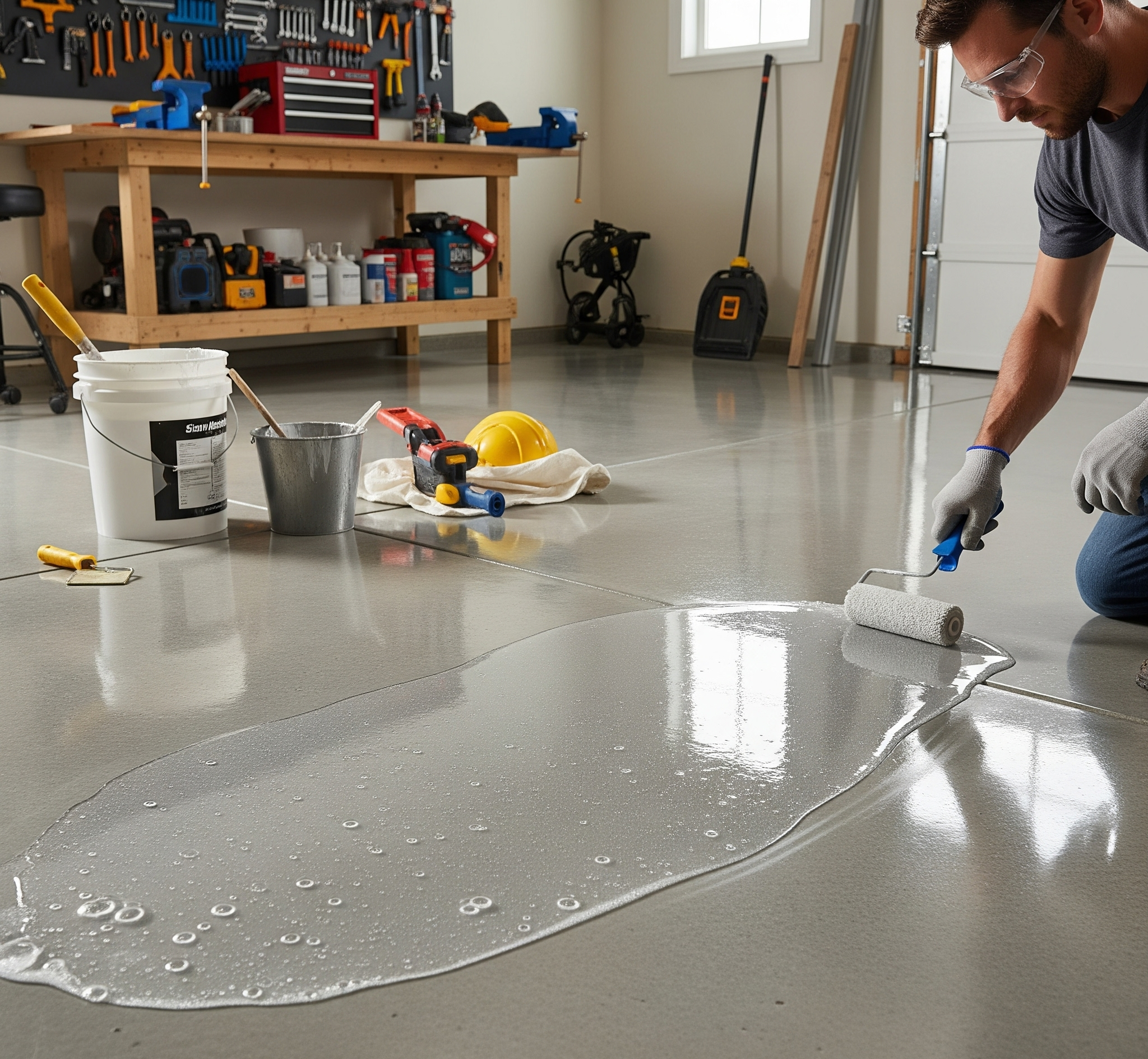
Use a roller on an extension pole to apply the coating in sections. Work in small areas and keep a wet edge to avoid lap marks. Consider applying color flakes while the epoxy is still tacky for added texture and appearance.

6. Let It Cure

Once the floor is fully coated, allow it to cure undisturbed. Most systems require 24 to 72 hours before foot traffic and a full week before driving on it.

7. Topcoat (Optional but Recommended)

Some DIY garage floor epoxy kits include a clear topcoat. This adds durability, chemical resistance, and UV protection to preserve your new surface for years.

Epoxy Garage Floor DIY: Tools & Materials Checklist

A smooth installation depends on having the right tools before you start. Here’s a checklist for a successful epoxy garage floor DIY job:

  • Concrete cleaner/degreaser

  • Crack filler or concrete patch

  • Etching solution or concrete grinder

  • Safety goggles and gloves

  • Mixing bucket and paddle

  • Epoxy resin and hardener

  • Paint rollers and extension poles

  • Paintbrushes for edges

  • Decorative flakes (optional)

  • Anti-slip additive (optional)

  • Topcoat sealant (optional)

When choosing your DIY epoxy garage floor kit, select one that matches your garage’s square footage and includes all components—primer, base coat, and topcoat if possible. Some premium kits even offer flakes, anti-slip additives, and mixing tools.

DIY Garage Floor Epoxy: Common Mistakes to Avoid

Doing it yourself can save hundreds of dollars, but cutting corners often leads to problems down the line. Here are pitfalls to avoid with your DIY garage floor epoxy:

  • Skipping surface prep: This is the #1 reason epoxy fails. If the floor isn’t properly cleaned and etched or ground, the coating will peel.

  • Applying on damp concrete: Moisture trapped beneath the coating causes bubbles and delamination. Always check for moisture before applying.

  • Poor mixing: Improperly mixed epoxy will not cure correctly. Always mix components thoroughly and according to instructions.

  • Working in extreme temperatures: Epoxy should be applied between 60°F and 85°F. Too cold or too hot, and it won’t bond properly.

  • Delaying application after mixing: Once mixed, the epoxy starts curing fast. Don’t pause—apply immediately.

Taking your time, following each step, and resisting the urge to rush will go a long way toward ensuring a smooth, durable result.

Do It Yourself Epoxy Garage Floor: Pros and Cons

Choosing to do a do it yourself epoxy garage floor comes with its fair share of pros and cons. Knowing both sides can help you decide whether to DIY or hire a pro.

Pros:

  • Cost savings – DIY kits typically cost $100–$500, significantly less than professional installations.

  • Personal satisfaction – The pride of seeing your own handiwork is hard to beat.

  • Customization – You get full control over colors, flakes, and textures.

Cons:

  • Labor intensive – The process is physically demanding and time-consuming.

  • Limited durability – DIY kits are often water-based and thinner than professional-grade systems.

  • Room for error – Mistakes in prep or application can lead to early failure.

For homeowners who enjoy home improvement and feel confident following detailed instructions, the benefits often outweigh the risks.

DIY Garage Floor Epoxy Kit: What to Look For

Not all kits are created equal. When choosing a DIY garage floor epoxy kit, keep these features in mind:

  • Solids content – Higher solids mean a thicker, longer-lasting finish.

  • Included topcoat – A UV-resistant topcoat protects color and gloss.

  • Slip-resistant additives – Important for safety, especially in wet or oily garages.

  • Coverage area – Make sure the kit can cover your full square footage with some margin.

  • Customer support – Look for brands that offer tutorials, videos, and responsive support.

Well-known brands like Rust-Oleum, Epoxy-Coat, and RockSolid offer homeowner-friendly kits that strike a balance between price and performance.

DIY Epoxy Garage Floor Kit: Is It Worth It?

So, is a DIY epoxy garage floor kit worth the effort?

In many cases, yes—especially for homeowners who don’t mind a little hard work. The final result is a floor that looks professional, performs well, and adds instant polish to a garage space. While it may not be as thick or rugged as a commercial system, it’s a solid middle ground for the average home.

If you need industrial strength or ultra-smooth finishes, professional installation may still be the better route. But for weekend warriors looking for a satisfying home upgrade, DIY epoxy hits the sweet spot between value and performance.

Why This Matters: Importance of the Article

Many homeowners dream of improving their garages, but budget or uncertainty holds them back. This article offers clarity, encouragement, and direction. Knowing the steps, tools, and potential pitfalls empowers people to take action—with confidence.

Epoxy flooring doesn’t just elevate the space visually. It protects it, transforms how it’s used, and brings a sense of order and pride. Whether tackling the project alone or preparing to hire help, informed decisions make all the difference.

Conclusion

A DIY epoxy garage floor project is more than just a coat of paint. It’s a transformation. With care, patience, and the right materials, your garage can become a cleaner, tougher, and more polished part of your home.

Yes, the process takes effort. But the results? Durable, attractive, and deeply satisfying.

Ready to Start Your Garage Transformation? (CTA)

If you’re ready to roll up your sleeves and start your epoxy flooring journey, or if you want expert help to ensure perfection, Los Angeles Epoxy is here for you.

Visit losangelesepoxy.com to explore our services, request a free quote, or get advice on the best approach for your space. Whether DIY or professional, we’ll help bring your garage vision to life—beautifully and reliably.

Recent Posts

Epoxy Garage Floor Cost: What You Need to Know Before You Invest

Epoxy Garage Floor Cost: What You Need to Know Before You Invest

Epoxy Garage Floor Cost: What You Need to Know Before You Invest

Epoxy Garage Floor Cost: An Honest Breakdown

The cost of transforming a dusty, cracked garage floor into a gleaming, high-performance surface depends on more than just square footage. Epoxy garage floor cost involves layers—literally and figuratively.

At its core, epoxy flooring offers a fusion of function and form. It protects concrete from moisture, oil, salt, and impact while providing a sleek, customizable finish. But how much does this kind of flooring makeover really cost?

Most homeowners can expect to pay between $3 to $12 per square foot. The range is wide because the job is never one-size-fits-all. A basic solid-color floor for a one-car garage may be around $900 to $1,500, while a larger space with premium finishes like metallic swirls or decorative flakes can exceed $4,000.

Professional-grade epoxy isn’t just paint—it’s a multi-layered system with specific installation steps: grinding, priming, base coating, applying decorative elements, and sealing with a topcoat. Each layer adds cost but also adds resilience and longevity.

Cost to Epoxy Garage Floor: What Influences the Price?

Several variables can sway the final cost to epoxy garage floor—some obvious, others less so. Understanding these factors helps manage expectations and avoid sticker shock.

1. Garage Size

Naturally, the bigger the garage, the higher the overall cost. However, pricing per square foot often decreases slightly with larger projects due to material and labor efficiencies.

2. Surface Condition

If your concrete has cracks, oil stains, pitting, or moisture issues, it requires more preparation. Surface repairs, grinding, and sealing add both labor time and material costs.

3. Epoxy Type

Standard epoxy coatings are the most affordable. Decorative flake systems and metallic epoxies push the price higher. Specialty finishes, like quartz or 3D effects, raise the bar further.

4. Number of Coats

Some floors require just a primer and one topcoat, while others may need multiple layers to reach the desired look or thickness. Each coat adds material and time to the project.

5. Topcoat Quality

Polyurethane or polyaspartic topcoats offer enhanced UV resistance, chemical protection, and longevity, but they also increase the total cost.

The investment reflects not just aesthetics but performance. A well-installed epoxy floor can easily last 15 to 20 years, making the cost worth every dollar in long-term durability.

Epoxy Garage Floor Cost Per Square Foot: A Closer Look

Calculating the epoxy garage floor cost per square foot can help you compare quotes and choose the right package. Here’s a general breakdown:

Type of Epoxy Finish

Cost Per Sq. Ft.

Notes

Basic Solid Color Epoxy

$3 – $5

Great for simple, clean looks

Decorative Flake Epoxy

$5 – $7

Adds texture, hides dirt, more slip-resistant

Metallic Epoxy Finish

$8 – $12

High-gloss, luxurious, unique swirls

Quartz or Specialty Coatings

$10 – $15+

Maximum durability and aesthetic appeal

Smaller garages (1-car) may have a higher per-square-foot cost due to base labor and material minimums. Larger garages or combining multiple areas (garage, workshop, entry) may reduce the cost per square foot.

How Much to Epoxy Garage Floor? Real-World Estimates

The question how much to epoxy garage floor often brings a flurry of conflicting answers. The real cost is best determined with a site visit, but these rough averages provide clarity:

  • 1-Car Garage (250–300 sq ft): $1,000 – $2,000

  • 2-Car Garage (400–500 sq ft): $1,400 – $3,500

  • 3-Car Garage (700+ sq ft): $2,500 – $5,000+

Add-on features like custom color matching, anti-slip media, or logo stencils may increase the quote. But these enhancements also elevate the final result into something distinctly personal.

How Much Does It Cost to Epoxy a Garage Floor Professionally?

Hiring a professional ensures the job is done with precision, high-grade materials, and proper curing techniques. So, how much does it cost to epoxy a garage floor when quality is the top priority?

A fully prepped and professionally installed floor, complete with multiple coats and a long-lasting top layer, usually starts at $1,400 and can reach $5,000 or more, depending on complexity.

Labor costs typically make up 40–60% of the total bill. But with that comes expertise, industrial-grade equipment, and peace of mind knowing the coating will bond properly and resist peeling, bubbling, or early failure.

Professionals also account for local environmental conditions, such as humidity or substrate moisture, which can drastically affect the lifespan of an epoxy coating if overlooked.

Epoxy Garage Floor Pricing: Comparing DIY vs. Professional

For the hands-on homeowner, DIY kits are available at hardware stores and online, typically costing $100–$300 for a one-car garage. However, the true epoxy garage floor pricing story goes deeper than the product label.

DIY systems often use water-based epoxies that are thinner, less durable, and more prone to wear. Surface prep is also key—rushing this step or skipping proper grinding can result in coatings that peel within months.

Professional systems, by contrast, include:

  • Diamond grinding or shot-blasting

  • Solvent-based or 100% solids epoxy

  • Optional decorative finishes

  • High-performance topcoats

The result is a smooth, uniform, and longer-lasting surface. While DIY might save money upfront, professional installation ensures a return on your investment in longevity, durability, and appearance.

Cost of Garage Floor Epoxy: Why It’s Worth It

While the cost of garage floor epoxy may seem high at first glance, it’s important to view it as a long-term value rather than a quick fix.

Consider the benefits:

  • Extended Concrete Life – Sealing prevents cracks and damage.

  • Low Maintenance – No more scrubbing oil stains or sweeping dust.

  • Improved Safety – Slip-resistant options reduce hazards.

  • Boosted Home Value – Adds appeal for potential buyers.

  • Aesthetic Appeal – Elevates a plain garage to showroom-worthy.

In essence, epoxy flooring isn’t just about the surface—it’s about transforming how the space looks, feels, and functions every single day.

Why This Matters: Importance of the Article

Many homeowners overlook the garage—treating it as a purely functional zone. But this space holds untapped potential. Knowing what goes into epoxy garage floor pricing, and what you get in return, empowers smarter decisions.

This article demystifies the cost, helping property owners navigate the world of epoxy with confidence. Because the garage deserves more than neglect. It deserves to shine.

Conclusion

Investing in an epoxy garage floor is more than just a cosmetic choice—it’s a smart, practical, and lasting improvement. With a range of price points, finishes, and performance levels, there’s an option for every budget and style.

Whether you’re looking for a clean, solid-color surface or a bold, high-gloss finish that turns heads, epoxy brings beauty and resilience in equal measure.

And in the long run, it pays for itself—through saved maintenance, preserved concrete, and daily satisfaction every time you step inside.

Ready to Upgrade Your Garage Floor? (CTA)

Take the guesswork out of epoxy pricing and discover what’s possible for your space. At Los Angeles Epoxy, expert installers are ready to guide you through the process—offering honest quotes, flawless results, and finishes that last.

Visit losangelesepoxy.com today to request your free estimate and take the first step toward a better garage.

Recent Posts

Flooring & Installation Services: Transforming Garage Spaces with Epoxy

Flooring & Installation Services: Transforming Garage Spaces with Epoxy

Flooring & Installation Services: Transforming Garage Spaces with Epoxy

Garage Epoxy Flooring: Where Strength Meets Style

Garages often start as utilitarian spaces—functional, unpolished, and overlooked. But that doesn’t have to be their story. Garage epoxy flooring is rewriting the narrative by turning gritty concrete into clean, resilient, and visually striking surfaces.

Epoxy brings more than shine. It delivers structure. Once applied, this tough-as-nails coating resists oil stains, hot tire marks, water intrusion, and everyday wear. The surface becomes impermeable and incredibly easy to clean—no more sweeping up concrete dust or scrubbing out impossible stains.

But what sets epoxy apart is its chameleon-like aesthetic flexibility. Want a bold solid color? A decorative flake pattern that hides dust? Or perhaps a high-gloss, showroom-style finish that reflects your prized vehicle like glass? Epoxy can do it all.

And for those who work, play, or create in the garage, this isn’t just a cosmetic upgrade—it’s a quality-of-life change. The comfort and cleanliness of a finished floor impact how you use the space, how it feels underfoot, and how proud you are to leave that garage door open.

Epoxy Concrete Systems: Built for Performance

Bare concrete is tough—but it’s also flawed. It cracks, it stains, and it absorbs every drop of oil or moisture like a sponge. Epoxy concrete systems are designed to protect and enhance that surface, extending its life and elevating its appearance.

These systems typically start with grinding the concrete to expose clean, porous material. Then comes the primer, base coats, color or texture layers, and a durable topcoat. The result? A seamless, non-porous finish that bonds chemically to the substrate.

Whether for residential garages, commercial workshops, or industrial facilities, epoxy is engineered to endure:

  • Chemical resistance – No more worrying about brake fluid, antifreeze, or cleaning agents.

  • Abrasion tolerance – It handles rolling toolboxes and dropped wrenches like a champ.

  • Moisture blocking – Especially important for basements or coastal environments.

The versatility of epoxy concrete is its superpower—it adapts to your space and your needs without compromising on strength.

Garage Floor Epoxy Cost: Breaking Down the Investment

Cost is often the first question on every homeowner’s mind. And rightly so. So, what’s the garage floor epoxy cost?

On average, expect to spend $3 to $12 per square foot. This range reflects variations in:

  • Floor condition – Cracks, moisture issues, and stains require surface prep.

  • Size of the garage – Larger spaces often benefit from better square-foot pricing.

  • System complexity – Solid color costs less than decorative flakes or metallics.

  • Topcoat choice – A simple clear coat differs in price from a high-performance polyurethane or polyaspartic finish.

For a two-car garage, this translates to a total cost between $1,400 and $3,500. While there are DIY kits under $500, they often fall short in durability and appearance. Professional installation ensures the right equipment, prep, and techniques—factors that determine whether your floor lasts five years or twenty.

Epoxy for Garage Floors: Practical Elegance

It’s one thing for a surface to look good. It’s another for it to work hard behind the scenes. Epoxy for garage floors excels at both.

It cures into a dense, chemical-resistant material that can bear the daily abuse of tire pressure, dropped tools, and fluctuating temperatures. It eliminates the “dust bloom” you get from plain concrete. And when applied with decorative flakes or color variations, it can even camouflage dirt between cleanings.

For families who use their garages for more than storage, epoxy adds polish to an otherwise overlooked space. Kids can rollerblade safely. Projects can be assembled without fear of spills. Even pets enjoy the smooth, cool surface during warmer months.

Function, meet form.

Glass Epoxy Floor: The Glossy Wow Factor

If sleek sophistication is the goal, the glass epoxy floor aesthetic delivers in spades. This finish—characterized by its intense gloss and mirror-like reflection—gives the impression of poured glass over concrete.

While the name is metaphorical (no real glass is involved), the effect is very real. This finish is ideal for show garages, retail environments, or even high-end residential basements. It creates depth, highlights architecture, and leaves an unforgettable impression.

Keep in mind: the glass effect is the result of expert installation and multiple clear coats. The process is meticulous, but the outcome is absolutely stunning.

Metallic Epoxy Garage Floor: Art Meets Durability

There’s beauty in utility, especially when it comes to a metallic epoxy garage floor. These floors use special pigments suspended in epoxy resin to create swirling, three-dimensional patterns. The effect is fluid, dynamic, and totally unique.

Each metallic floor is a one-of-one—no two installations are ever identical. You might see waves of silver, rivulets of bronze, or flashes of cobalt blue. It’s functional art, built to withstand daily abuse but dressed like a luxury showroom.

Ideal for homeowners with a creative flair or a love for custom design, metallic epoxy lets you put your personal stamp on a space that’s often ignored.

Why This Matters: Importance of the Article

This article isn’t just about flooring—it’s about reclaiming the garage as a valuable part of the home. Too often, it becomes a catch-all space, overlooked and underutilized. But with the right flooring solution, it becomes something entirely different: organized, attractive, and a joy to use.

Understanding your options, from cost to finish type, empowers you to make the right decision for your space. It’s not just about dollars spent—it’s about daily experience and long-term satisfaction.

And whether you choose a basic flake system or a high-end glass effect, epoxy guarantees you’ll never look at your garage the same way again.

Conclusion

Epoxy is more than a coating—it’s a transformation. It turns dull gray slabs into striking, high-performance surfaces that feel as good as they look. From garage epoxy flooring to metallic masterpieces, every floor tells a new story.

Durable. Clean. Customizable. Epoxy is the upgrade you didn’t know you needed until now. And once installed, it quietly enhances your life in ways both seen and felt—every time you open the garage door.

Ready to Revive Your Garage? (CTA)

Your dream garage floor is just one decision away. Whether you want sleek shine, subtle texture, or bold creativity, Los Angeles Epoxy is ready to bring it to life.

Visit losangelesepoxy.com to explore finishes, request a free estimate, or speak with our expert team. Let’s create a floor that’s as tough as it is beautiful—and built to last for years to come.

Recent Posts

Garage Epoxy Flooring: Durable Beauty for Concrete Spaces

Garage Epoxy Flooring: Durable Beauty for Concrete Spaces

Garage Epoxy Flooring: Durable Beauty for Concrete Spaces

How Much to Epoxy Garage Floor? Breaking Down the Investment

Garage floors do more than support your car—they carry the weight of your lifestyle. Whether it’s oil changes on a Sunday, home gym routines, or just the daily grind, your floor deserves more than dust and cracks. That’s where epoxy flooring comes into play. But one question looms: how much to epoxy garage floor?

The cost to epoxy a garage floor depends on several crucial variables. Size is the obvious one. A single-car garage might run you $1,000–$1,800, while a standard two-car garage typically falls in the $1,400 to $3,500 range. But that’s just the starting point.

Other factors include:

  • Condition of the existing concrete – Cracks, spalling, or oil-saturated spots require additional prep work.

  • Type of epoxy system – From standard flake systems to high-gloss marble epoxy floor designs, materials vary significantly in price.

  • Number of coats – A multi-layer system will cost more but deliver better durability and aesthetic depth.

  • Add-ons – Anti-slip textures, UV-resistant topcoats, metallic pigments, or custom logos each affect the total cost.

Professional installation, while more expensive than DIY kits, ensures a finish that lasts for decades, not just a few seasons.

Epoxy Flooring Garage Benefits: Beyond Just Looks

When people think of epoxy flooring garage upgrades, they often picture a shiny finish—and rightly so. But the benefits go far beyond aesthetics.

Epoxy coatings transform raw, porous concrete into a sealed, non-absorbent surface. This means no more oil stains, chemical burns, or unsightly pitting from road salt. It’s water-resistant, dustproof, and practically impervious to wear.

Additional benefits include:

  • Slip-resistance: With added texture, epoxy becomes safer to walk on—even when wet.

  • Low maintenance: A quick sweep and occasional mop are all it takes to keep it looking pristine.

  • Enhanced lighting: The reflective finish brightens up the entire space.

  • Longevity: Professionally applied epoxy can last 15 to 20 years with proper care.

And for families who use their garages as hobby rooms, workshops, or even man caves, epoxy flooring elevates the entire experience.

Concrete Epoxy Floor Systems for the Modern Garage

Gone are the days when garages were forgotten corners of the house. Today’s homeowners see the garage as an extension of their living space—and concrete epoxy floor systems make that vision a reality.

Epoxy is ideal for concrete because it chemically bonds with the substrate. It doesn’t just sit on the surface like paint; it becomes part of the concrete itself. This bond ensures exceptional adhesion and long-term performance.

Some popular epoxy systems include:

  • Flake Epoxy – Chips added for texture, color, and slip resistance.

  • Metallic Epoxy – Swirling pigments for a marbled, high-end look.

  • Solid Color Epoxy – Clean, classic, and professional.

  • Quartz Epoxy – A blend of resin and granules for heavy-duty durability.

Each system can be customized in color, texture, and finish—glossy, satin, or matte—offering a personalized approach to industrial-strength flooring.

From Cement Floor Paint to Marble Epoxy Floor: A Visual Upgrade

While cement floor paint may be the go-to for budget DIYers, it’s often a temporary solution. It peels. It scratches. It fades. Most formulas lack the durability needed for high-traffic or vehicle-heavy areas. After a year or two, you’re right back where you started.

Enter the marble epoxy floor. A true work of art, this finish offers breathtaking depth and motion—think waves of color, shimmer, and sophistication. Ideal for those who want luxury underfoot, it mimics high-end stone without the cost or fragility.

And for those seeking balance, there’s a middle ground: flake systems. They offer visual variety, disguise dirt, and stand up to just about anything. You can even match colors to your vehicle, home exterior, or sports team of choice.

Beauty and durability aren’t mutually exclusive. Epoxy brings both together, seamlessly.

How Much Does It Cost to Epoxy a Garage Floor?

It’s the question that echoes through every home improvement conversation: how much does it cost to epoxy a garage floor?

The answer? It depends—but here’s a general guideline:

Garage Size

Basic Epoxy System

Decorative Epoxy System

Premium Metallic Finish

1-Car Garage (250 sq ft)

$1,000–$1,800

$1,500–$2,400

$2,000–$3,000

2-Car Garage (400–500 sq ft)

$1,400–$2,500

$2,000–$3,500

$3,000–$5,000

The range accounts for prep work, coatings, labor, and topcoats. If your concrete is in great condition and you choose a basic system, you’ll stay on the lower end. If your surface needs repairs or you’re after a showroom finish, plan for the higher bracket.

While epoxy is an investment, it’s a cost-efficient one—especially when you consider its lifespan and virtually maintenance-free nature.

Industrial Flooring for Heavy Use Garages & Workshops

If your garage is more workshop than parking space, you need something more robust than the standard flake system. Industrial flooring options offer thicker coatings, chemical resistance, and enhanced impact durability.

These are commonly used in:

  • Auto repair shops

  • Home mechanic bays

  • Fabrication garages

  • Heavy equipment storage

Industrial-grade epoxy can be layered with urethane topcoats or fortified with quartz and aggregate for added traction and compressive strength. Some systems even incorporate ESD (electrostatic discharge) resistance for use around sensitive electronics.

Your garage doesn’t have to be industrial to benefit from industrial-grade durability. It simply has to work as hard as you do.

Why This Matters: Importance of the Article

Too often, homeowners delay upgrading their garage floors until it’s too late—when cracks deepen, stains become permanent, or moisture damage sets in.

This article serves as a guidepost. Understanding epoxy options, costs, and applications empowers homeowners to make a proactive, informed decision. The garage isn’t just a holding zone—it’s a valuable part of your property that deserves care and investment.

Well-installed epoxy not only enhances aesthetics and functionality, but it also boosts resale value. First impressions matter, and a clean, gleaming garage speaks volumes.

Conclusion

Epoxy flooring is more than just a visual upgrade—it’s a structural, practical, and emotional one. It brings order to chaos, clarity to clutter, and polish to utility. From basic flake coatings to marble-inspired finishes, there’s an epoxy solution for every style, budget, and lifestyle.

And once installed, the floor requires almost nothing from you—no special maintenance, no repairs, no fuss. Just reliability, shine, and strength.

When compared to paint or other surface treatments, epoxy stands tall as a wise long-term investment for any garage.

Ready to Transform Your Garage? (CTA)

If your garage floor is cracked, stained, or simply uninspiring, now is the perfect time for a change. Los Angeles Epoxy offers tailored solutions for homeowners and professionals alike.

Visit losangelesepoxy.com to explore your options, view our gallery, or schedule a free estimate. Let our team help you build a floor that’s more than just functional—it’s a foundation for everything you do.

Recent Posts

Costs & Flooring Options for Epoxy Concrete Surfaces

Costs & Flooring Options for Epoxy Concrete Surfaces

Costs & Flooring Options for Epoxy Concrete Surfaces

Breaking Down Epoxy Floor Cost: What You Need to Know

When considering a new flooring upgrade, epoxy flooring often emerges as the front-runner—and for good reason. It’s durable, eye-catching, low-maintenance, and resistant to just about everything life (or a car) can throw at it. But what about the cost?

The epoxy floor cost varies widely, depending on several key factors: surface preparation, square footage, the type of epoxy used, the number of coats, and whether any decorative elements are involved. On average, expect to pay anywhere from $3 to $12 per square foot.

For a basic application with no frills, prices hover around the lower end. But if you’re dreaming of metallic finishes, flake broadcasts, or 3D illusions, the price climbs—but so does the wow factor.

Labor is another component. While DIY kits might seem tempting with a $200–$400 sticker, they rarely provide the same lasting quality or visual impact as a professionally installed system. The preparation alone—cleaning, grinding, patching—requires experience and specialized equipment.

In the long run, investing in professional epoxy flooring pays off in durability and peace of mind.

Comparing Floor Coating Options for Concrete Surfaces

Concrete floors are like blank canvases. And when it comes to floor coating, epoxy isn’t the only game in town—but it’s arguably the most well-rounded.

Here’s how the most common coating systems stack up:

  • Epoxy Coatings – Strong, seamless, and glossy. Ideal for high-traffic areas. Available in endless colors and textures. Cure times vary, but the durability is unmatched.

  • Polyurethane Coatings – Offers flexibility and UV resistance. Less prone to yellowing than epoxy. Great for commercial kitchens or outdoor areas.

  • Acrylic Sealers – Budget-friendly and easy to apply, but thinner and less durable. Better suited for decorative, low-traffic zones.

  • Concrete Stains – Visually dynamic but offer no protective barrier. Typically paired with a sealer.

Epoxy outshines in longevity and customization, especially in garages, workshops, and industrial settings. It seals the concrete, resists chemicals, and can handle both weight and wear without cracking under pressure.

When choosing a coating, it’s essential to consider the environment. Is the space exposed to sunlight? Heavy machinery? Foot traffic or rolling tires? A seasoned contractor can guide you through the best system for your specific needs.

Epoxy Paint for Concrete vs. Industrial Epoxy Systems

The term epoxy paint for concrete gets tossed around frequently in home improvement aisles, but it can be misleading.

Epoxy paint is a hybrid—a latex-based paint mixed with a bit of epoxy for adhesion. It’s simple, inexpensive, and designed for homeowners looking for a weekend DIY project. But in terms of performance? It barely scratches the surface compared to commercial-grade epoxy coatings.

True epoxy flooring is a two- or three-component system that chemically cures into a solid plastic-like layer. It bonds with the concrete, not just rests on top. It’s thicker, tougher, and far more resistant to stains, abrasions, heat, and moisture.

If you’re looking to refresh a lightly used basement or a utility room, epoxy paint may suffice. But for a garage, warehouse, or business? Industrial epoxy is the clear winner. It’s engineered to endure—day in, day out.

Epoxy Floor Garage Upgrades: What’s Included?

Transforming your garage into a polished, usable space starts with understanding what goes into an epoxy floor garage installation.

Most full-service epoxy garage upgrades include:

  1. Mechanical Surface Prep – Diamond grinding or shot blasting to create a clean, roughened surface for proper adhesion.

  2. Crack & Pit Repair – Filling and leveling any imperfections in the existing concrete.

  3. Primer Application – Helps soak into the substrate and lock the system down.

  4. Base Coat & Color Flakes (Optional) – The color layer and visual design features.

  5. Topcoat Sealant – Adds UV stability, chemical resistance, and the desired gloss level.

Some systems also offer anti-slip additives, moisture mitigation barriers, and antibacterial topcoats depending on your environment. The beauty of epoxy is in the customization—it’s not one-size-fits-all.

Homeowners looking to increase both function and home value often find this is one of the most cost-effective upgrades they can make.

How Much Does It Cost to Epoxy a 2 Car Garage?

A common question with a surprisingly variable answer: how much does it cost to epoxy a 2 car garage?

For a standard 400–500 square foot two-car garage, the average cost ranges from $1,500 to $3,500. That includes materials, prep, labor, and finishing. Here’s how the costs break down:

  • Basic Solid Color Epoxy: $3–$5/sq ft

  • Decorative Flake System: $5–$7/sq ft

  • Metallic or Designer Finish: $8–$12/sq ft

Prices also fluctuate based on your region, the condition of your concrete, and whether any moisture barriers or extra repairs are needed.

A key tip: beware of contractors who quote suspiciously low prices. Cutting corners on prep work or materials can lead to peeling, bubbling, and a floor that fails within a year. Quality installations should last 10 to 20 years or more with minimal maintenance.

Epoxy Flooring Garage Solutions That Last

The phrase epoxy flooring garage isn’t just about aesthetics. It’s about utility. Strength. Longevity. For many homeowners, the garage is more than a car park—it’s a workspace, a gym, a hobby zone, or a clean extension of the home.

Epoxy transforms that space into something special. It resists oil, road salt, moisture, and even hot tire pickup. With the right system in place, your garage floor becomes practically bulletproof.

And cleanup? A breeze. No more oil stains or dust clouds. Just a damp mop and a gentle cleaner restore the shine.

Epoxy flooring isn’t just a facelift—it’s a foundation you can rely on, year after year.

Why This Matters: Importance of the Article

Flooring choices are easy to overlook—until they start breaking down. This article sheds light on an often-ignored part of the home that makes a massive difference in both form and function.

Understanding the costs, materials, and expectations around epoxy flooring ensures you make the right choice from the start. A well-installed epoxy floor doesn’t just serve the present—it secures the future. It’s cleaner, stronger, more attractive, and adds genuine value to your property.

Making informed decisions now prevents costly repairs later. And in a world of rising home improvement costs, that’s not just smart—it’s essential.

Conclusion

Epoxy flooring isn’t a luxury—it’s a long-term solution. Whether you’re coating your garage, refreshing a basement, or protecting a commercial workspace, it offers a rare blend of strength, style, and simplicity.

Yes, the upfront cost might seem like more than a can of paint. But the payoff? A resilient, beautiful surface that stands up to life’s messes and looks good doing it.

It’s a commitment to quality, cleanliness, and lasting value. And in today’s world, that matters more than ever.

Ready to Upgrade Your Floor? (CTA)

Don’t settle for stained, cracked, or dusty concrete. It’s time to give your space the upgrade it deserves.

Visit Los Angeles Epoxy to explore your epoxy flooring options, get a free quote, and connect with professionals who care about the details. Whether it’s your home garage or a commercial floor, we’ll help you build something beautiful—one layer at a time.

Recent Posts

Call Now 213-513-5290!